
Ureteroscopy (Laser Lithotripsy) for Kidney & Ureteral Stones in Arlington & Dallas–Fort Worth, TX
Direct stone visualization. Precise laser treatment. Thoughtful stent care and prevention.
This definitive procedure, known internally as CULLS (Cystoscopy, Ureteroscopy with Laser Lithotripsy), is the most effective solution for clearing stones in the ureter or kidney. Care is provided by Dr. Richard Bevan-Thomas at both USMD Hospital Arlington and SCNT (Surgical Centers of North Texas), ensuring the highest standards of laser lithotripsy and stent management for patients in the DFW area.
BALANCED GUIDANCE: Your Kidney Stone Treatment Options
Kidney stone pain can stop life cold. After your scan confirms a stone, the real question is: what’s the best way to clear it?
Dr. Bevan-Thomas reviews your images with you and gives balanced advice:
- ESWL (shockwaves) is the best approach for many patients—noninvasive and effective when stone size, location, density (Hounsfield units), and anatomy are favorable.
- CULLS —our term for ureteroscopy with laser lithotripsy (URS/LL)—is a reasonable choice for select patients, especially for residual fragments after ESWL, lower-pole or anatomically challenging stones, harder (denser) stones, or when we need the certainty of direct visualization and removal.
- PCNL is reserved for very large or complex stones.
Together, you and Dr. Bevan-Thomas choose the least-invasive option that will actually work for your stone.
What is CULLS (Ureteroscopy with Laser Lithotripsy)?
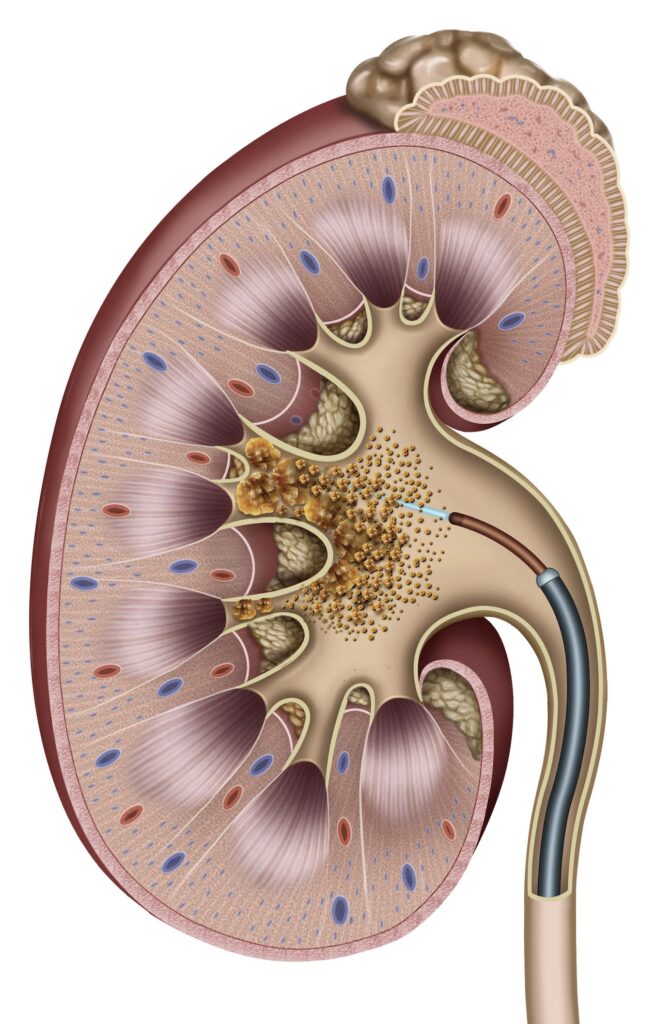
With CULLS, Dr. Bevan-Thomas passes a thin, flexible scope through the natural urinary tract to see the stone directly. The Moses laser then dusts the stone into sand-like particles or fragments it for removal with a tiny basket. No incisions.
We use “CULLS” internally as a simple name; it’s the same proven ureteroscopy + laser procedure.
When Dr. Bevan-Thomas Recommends CULLS Instead of ESWL
CULLS is typically preferred when one or more apply:
Typical procedure flow:
- Residual fragments after ESWL that need definitive clearance.
- Lower-pole stones or unfavorable infundibulopelvic angle where ESWL fragments don't clear well.
- High-density (“hard”) stones less likely to break with shockwaves. Anatomic considerations (e.g., body habitus/skin-to-stone distance) that reduce ESWL success.
- Obstruction with ongoing pain where direct relief and/or stent placement is prudent.
- Multiple stones that can be addressed in one endoscopic session.
If there’s an active urinary infection, Dr. Bevan-Thomas treats the infection first and schedules CULLS when it’s safe.
What is CULLS
Ureteroscopy with Laser Lithotripsy
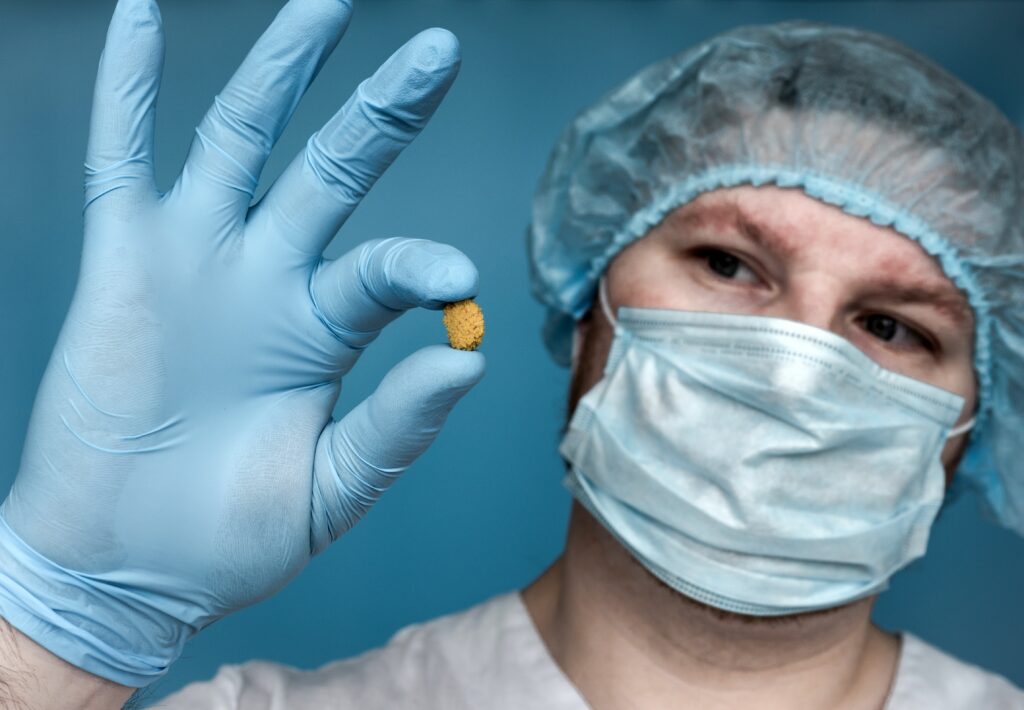
With CULLS, Dr. Bevan-Thomas passes a thin, flexible scope through the natural urinary tract to see the stone directly. A holmium:YAG laser then dusts the stone into sand-like particles or fragments it for removal with a tiny basket. No incisions.
ESWL vs. CULLS vs. PCNL
(Clear, Honest Comparison)
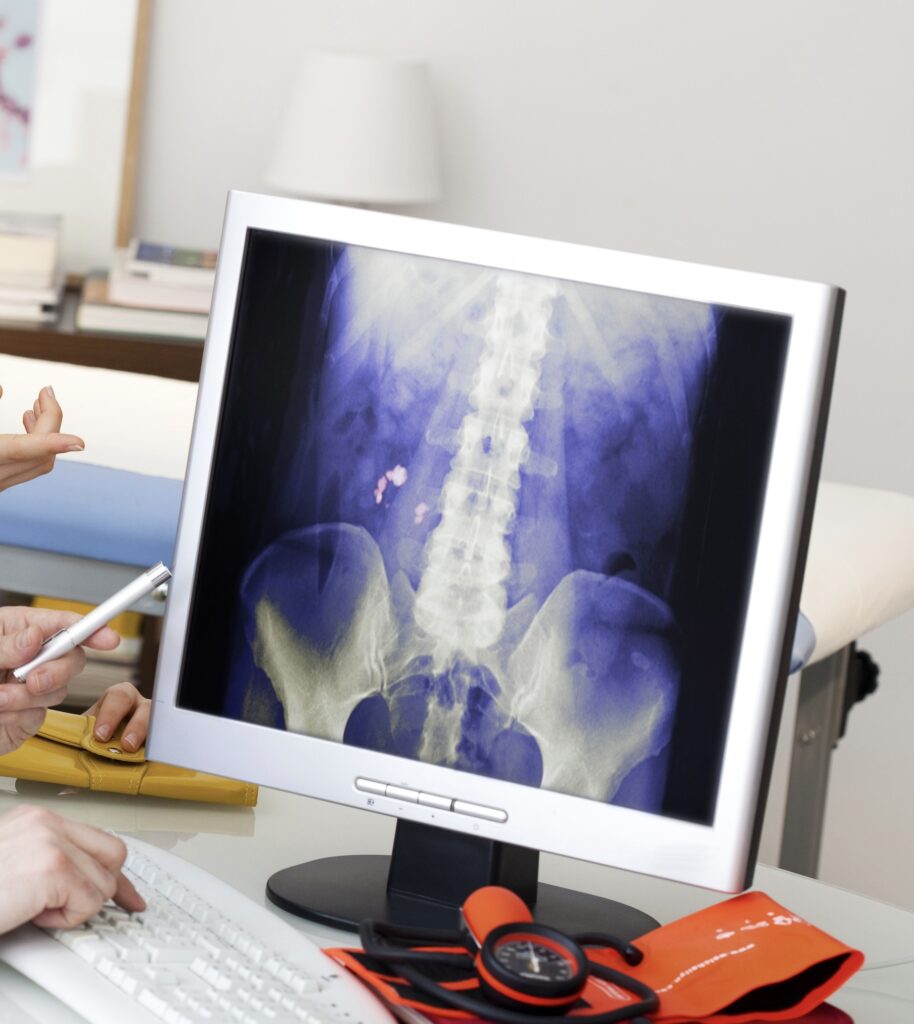
Not sure which kidney stone treatment is right for you in Arlington? Dr. Bevan-Thomas will review your CT/ultrasound, stone size/location, density, and anatomy to recommend.
| Procedure | Key Benefit & Primary Indication | Internal Link |
|---|---|---|
| ESWL (Shockwave) | Non-invasive, quick recovery, often avoids a stent. Best for smaller, softer stones in favorable positions. | ESWL (Shockwave) |
| CULLS (Ureteroscopy/Laser) | Highest immediate clearance, direct visualization. Preferred for harder stones, lower-pole stones, or residual fragments. | CULLS (Ureteroscopy/Laser) |
| PCNL | Reserved for very large/complex kidney stones (>2 cm, staghorn). Requires a small back incision. | PCNL |
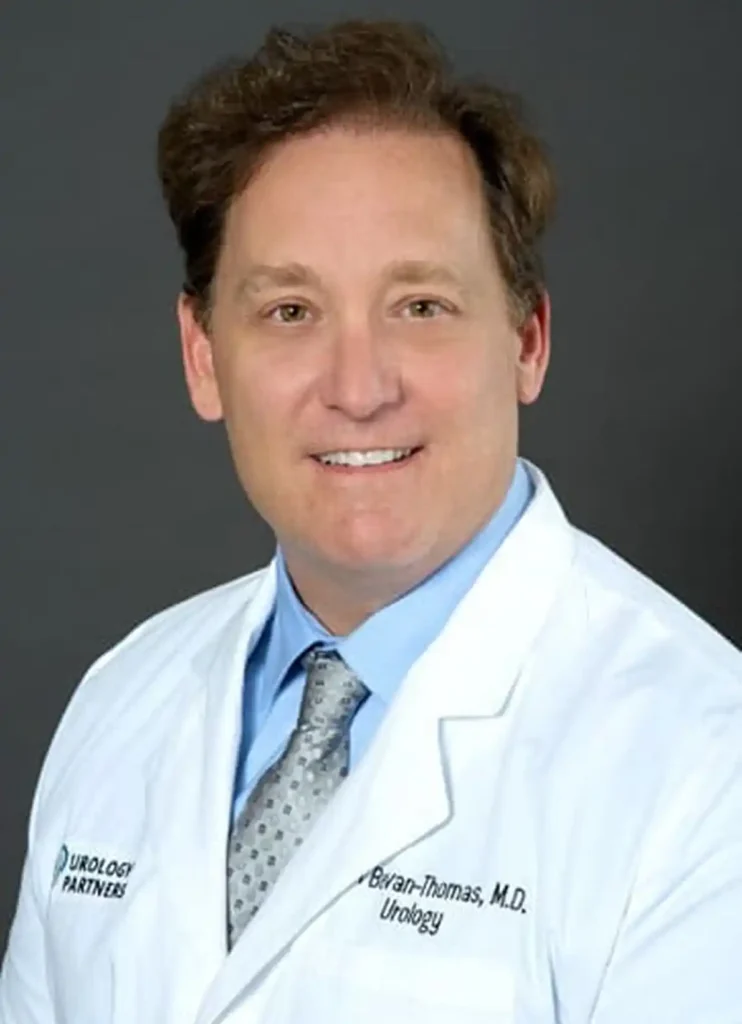
What to Expect with Dr. Bevan-Thomas
- Over 3,000 robotic surgeries since 2002; refined catheter-free suprapubic recovery protocol
- Meticulous nerve-sparing and endopelpic fascia–sparing techniques to support erections and early continence
- Full-spectrum care: NanoKnife® (IRE) focal therapy, full-gland cryoablation, coordinated IMRT, and Active Surveillance when appropriate.
Before Your Procedure
- Urine testing & culture to ensure no active infection.
- Medication review (including blood thinners) and coordinated holds when appropriate.
- Fasting & ride per anesthesia instructions.
- Bring CT/ultrasound reports, any stone analysis, and a medication list.
Day of Surgery
- Location: USMD Hospital Arlington.
- Time in OR: typically 30–120 minutes depending on size, number, and location.
- Going home: same-day discharge in most cases, with direct post-op guidance from Dr. Bevan-Thomas and team.
Aftercare & Recovery
- Common, temporary symptoms: urgency/frequency, mild burning, blood-tinged urine, bladder spasms, and flank discomfort (often during urination). These improve over days to weeks.
- Hydration: steady water intake helps flush dust/fragments.
- Activity: light activity the same day; increase as tolerated.
- Prefer to read more? Visit our Stone Education Library (internal resource) during recovery.
The Part Most People Worry About
Many patients leave with a ureteral stent for 3–10 days (occasionally longer if clinically needed). Dr. Bevan-Thomas will decide stent timing and removal based on your case.
- Normal with a stent: urgency, frequency, blood-tinged urine, brief flank pain during urination.
- Call us urgently for fever/chills, severe uncontrolled pain, inability to urinate, or persistent heavy bleeding.
- Removal: typically a quick in-office removal (with or without a short string) after timing is confirmed.
How Dr. Bevan-Thomas Lowers Your Future Risk
Removing the stone is step one; preventing the next one is just as important. After you’re comfortable, Dr. Bevan-Thomas discusses:
- Hydration goals and diet coaching (sodium moderation, appropriate calcium with meals, oxalate awareness).
- High-Volume Endoscopic Stone Program at USMD Hospital Arlington.
- Full Spectrum—ESWL, Ureteroscopy (CULLS), PCNL—so you’re never shoehorned into one approach.
- Clear expectations, hands-on stent counseling, and a prevention-first mindset.
How a Decision is Made
A 52-year-old from Grand Prairie had a 9 mm lower-pole kidney stone with high density on CT. ESWL was discussed first—the best option for many—but due to the lower-pole anatomy and density, Dr. Bevan-Thomas recommended CULLS for a one-and-done solution. The stone was dusted; a stent stayed five days. At follow-up, he was stone-free and left with a simple prevention plan.
Why Patients Choose Dr. Bevan-Thomas & UPNT
- Balanced Guidance: ESWL first when it’s truly best; CULLS when anatomy/density or residual fragments make it wiser.
- Stone analysis to learn composition.
- 24-hour urine testing for recurrent stone formers.
- Targeted medications when indicated (e.g., thiazides, citrate).
Schedule Stone Care in Arlington, TX
Ready for a plan that works the first time? Dr. Bevan-Thomas will help you choose ESWL, CULLS, or PCNL based on your stone—and get you back to normal fast.
- 866-367-8768
- 801 West I-20 Suite 1 • Arlington TX 76017