For decades, prostate cancer treatment followed a straightforward principle: treat the entire prostate. Whether through surgery or radiation, the goal was to remove or destroy all prostate tissue to eliminate cancer and reduce the risk of recurrence.
That approach is still appropriate—and often necessary—for many men.
However, advances in imaging and diagnostics have changed how we think about prostate cancer. Today, in carefully selected patients, it is possible to treat only part of the prostate while maintaining cancer control and reducing the risk of life-altering side effects.
This approach is not for everyone. In my practice, focal therapy is best reserved for men who are particularly concerned about preserving erectile function and who meet strict clinical criteria.
Why Most Treatments Involve the Entire Prostate
Prostate cancer is often multifocal, meaning cancer can exist in more than one area of the gland. Historically, physicians could not reliably identify exactly where all clinically significant cancer was located. Because of that uncertainty, treating the entire prostate became the safest and most reliable strategy.
Whole-gland treatment typically includes radical prostatectomy or radiation therapy. These treatments have decades of long-term data supporting excellent cancer control and remain the gold standard, particularly for men with higher-risk disease.
It is also important to note that side effects from whole-gland treatment have improved dramatically. Long-term urinary incontinence is far less common today than it once was, especially when treatment is performed using modern techniques and by experienced teams.
What Has Changed: Precision Imaging
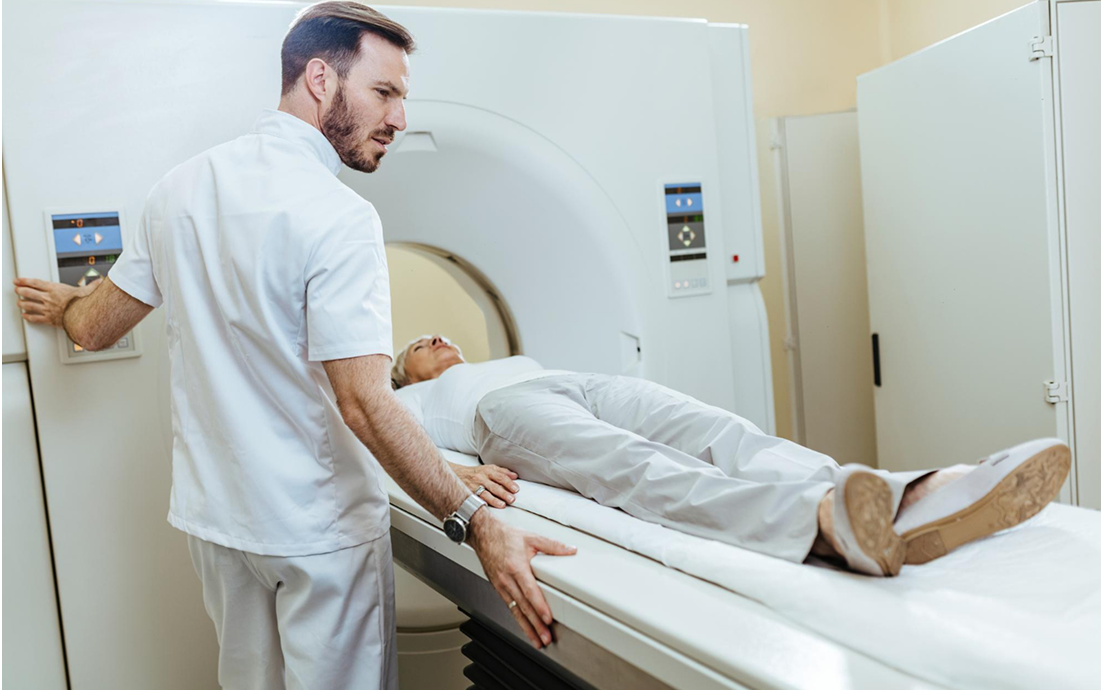
The most meaningful change in prostate cancer care has been the ability to better characterize the disease before treatment decisions are made. We no longer have to guess.
- High-Quality Multiparametric MRI: This allows us to visualize suspicious regions within the prostate and assess tumor size, location, and aggressiveness.
- PSMA PET Imaging: In select situations, this advanced scan helps identify if cancer has spread outside the prostate. If it has, focal treatment is usually inappropriate.
- MRI-Guided Targeted Biopsy: This refines the diagnosis by confirming cancer grade and extent with much greater accuracy than traditional random biopsy alone.
Together, these tools allow for a thoughtful, individualized discussion rather than a “one-size-fits-all” approach.
When and Why I Consider Focal Therapy
Focal therapy is based on the idea of treating the part of the prostate harboring the significant cancer while preserving surrounding tissue.
In my practice, I primarily consider this for men who are highly motivated to preserve erectile function and who understand both the benefits and limitations.
One of the most effective options we use is Irreversible Electroporation, commonly known as NanoKnife. This technology allows for targeted treatment while minimizing injury to nearby structures, specifically the nerves responsible for erections.
The “Regional” Approach Importantly, focal therapy does not mean treating only a single “spot” seen on an MRI. When I perform focal therapy, I treat a defined region of the prostate that includes the known tumor as well as a safety margin of surrounding tissue. This regional approach is designed to improve cancer control and reduce the risk of early recurrence compared to treating only the visible lesion.
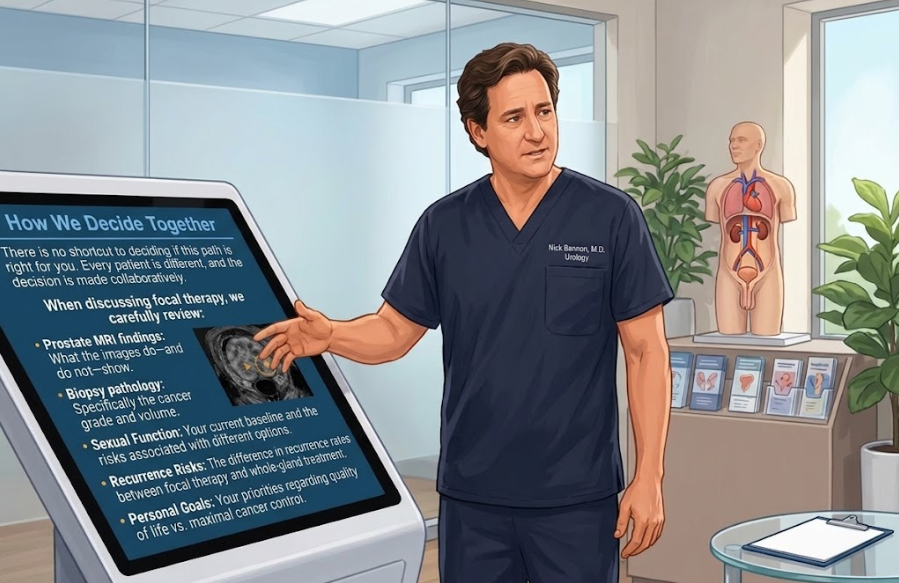
How We Decide Together
There is no shortcut to deciding if this path is right for you. Every patient is different, and the decision is made collaboratively.
When discussing focal therapy, we carefully review:
- Prostate MRI findings: What the images do—and do not—show.
- Biopsy pathology: Specifically the cancer grade and volume.
- Sexual Function: Your current baseline and the risks associated with different options.
- Recurrence Risks: The difference in recurrence rates between focal therapy and whole-gland treatment.
- Personal Goals: Your priorities regarding quality of life vs. maximal cancer control.
I also work closely with our radiation oncologist at Texas Cancer Specialists. Our recommendations are based on what is best for the cancer, not simply which procedure I prefer. Surgery, radiation, focal therapy, and active surveillance are all discussed openly.
Understanding the Trade-Offs
While focal therapy reduces the risk of erectile dysfunction, it comes with a trade-off that must be discussed openly: Recurrence.
Because not all prostate tissue is treated, there is a possibility that cancer could develop or be detected elsewhere in the gland over time. This risk depends heavily on patient selection and the quality of the treatment planning.
Published data on NanoKnife suggests that, in properly selected patients, cancer recurrence rates are under 10% at five years. In my experience, with careful regional treatment and strict selection criteria, outcomes have been at least as good—and often better.
However, if cancer biology or imaging suggests a high likelihood of recurrence, whole-gland treatment remains the safest option for long-term survival.
Experience and Judgment Matter
The decision to pursue focal therapy should never be based on technology alone. It requires experience across the full spectrum of prostate cancer treatment.
I have more than 20 years of experience treating prostate cancer, including advanced training in prostate cancer management at MD Anderson Cancer Center. My background in robotic prostate surgery allows me to evaluate focal therapy not just as a procedure, but in the context of long-term cancer control.
The focus is always on keeping the risk of recurrence low while preserving your quality of life.
The Bottom Line
Most prostate cancer treatments still involve treating the entire prostate, and for many men, that remains the best option.
However, advances in imaging and biopsy have made focal therapy a viable option for a select group of men. When performed thoughtfully by an experienced team, it offers a middle ground that prioritizes sexual function without sacrificing safety.
Are you interested in learning if you are a candidate for Focal Therapy? The most important step is an individualized evaluation. Contact our office today to schedule a consultation so we can review your imaging and discuss your options.