
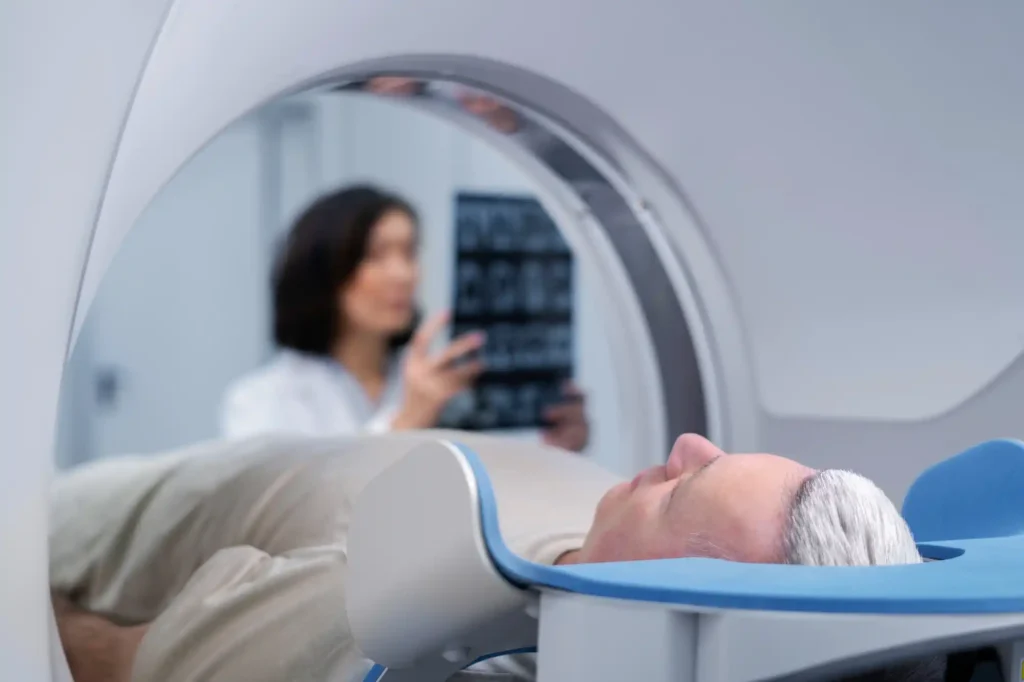
IMRT for Prostate Cancer in Arlington & Fort Worth
For men who prefer radiation instead of surgery, Intensity-Modulated Radiation Therapy (IMRT) is a highly precise, non-invasive option with excellent long-term cancer control for appropriately selected patients. On my team, I coordinate your care with Texas Cancer Specialists—led locally by Dr. Peter Lanasa (Arlington) and Dr. Jerry Barker (Fort Worth)—so you get a seamless, multi-disciplinary plan from diagnosis through treatment and follow-up. Dr. Bevan-Thomas personally oversees your staging and uses advanced diagnostic data to ensure your radiation plan is precisely tailored to your specific needs.
Why Choose IMRT Prostate Cancer Treatment
in Arlington & Fort Worth?
We deliver a comprehensive approach to prostate cancer care:
- True Team Care & Ongoing Coordination: I stay involved from prostate cancer biopsy and staging through your radiation plan and PSA follow-up. Your care is coordinated at every step.
- Expert Radiation Oncologists: Dr. Lanasa & Dr. Barker deliver advanced image-guided IMRT (IGRT) in Arlington using state-of-the-art linear accelerators.
- Local Convenience: Clinics are easily accessible in Arlington and Fort Worth with coordinated scheduling and communication.
- Protection First: Routine use of rectal spacers (Barrigel®, SpaceOAR®) when appropriate to reduce rectal radiation dose and minimize side effects.
- Comprehensive Treatment Options: If IMRT isn't ideal, I also offer catheter-free robotic prostatectomy, NanoKnife® (IRE) focal therapy, full-gland cryoablation, or Active Surveillance.

How Does it Work
IMRT: Precision External Beam Radiation Therapy
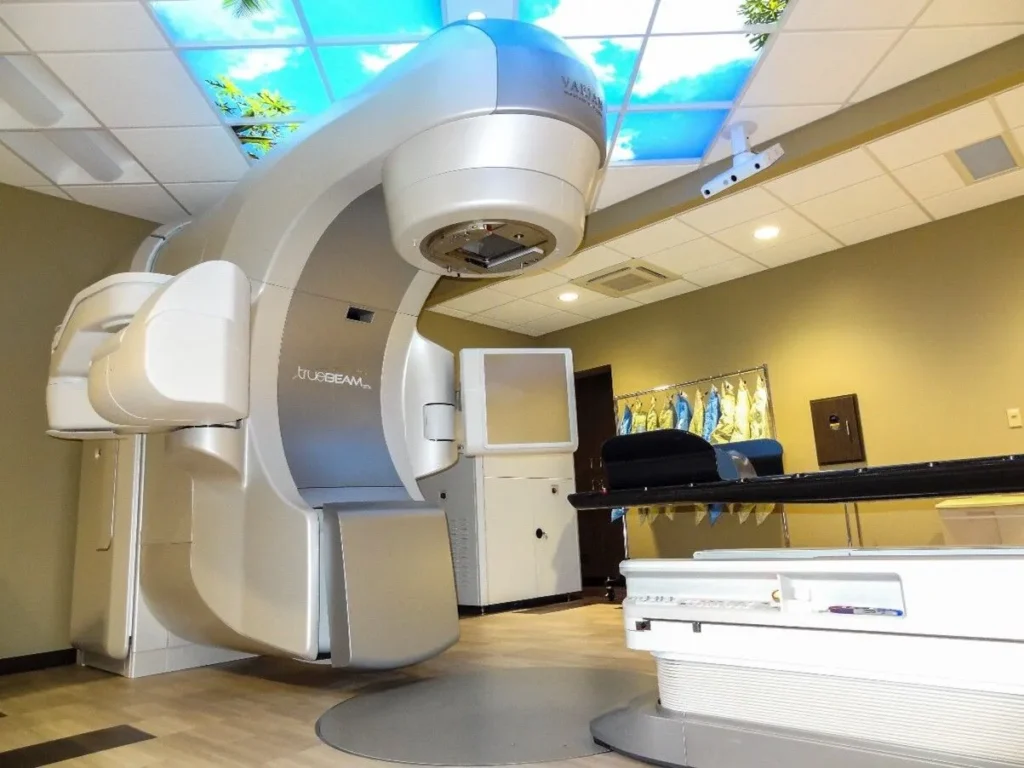
IMRT is a modern form of External Beam Radiation Therapy (EBRT) that sculpts dose to the prostate while avoiding nearby organs (bladder, rectum, urethra). It’s delivered as quick, daily outpatient sessions of precision radiation therapy prostate cancer fort worth. While different than SBRT (Stereotactic Body Radiation Therapy) which uses higher doses over fewer days, IMRT provides excellent dose control over a standard schedule.
How Your radiation Course Unfolds
| Step | Description |
|---|---|
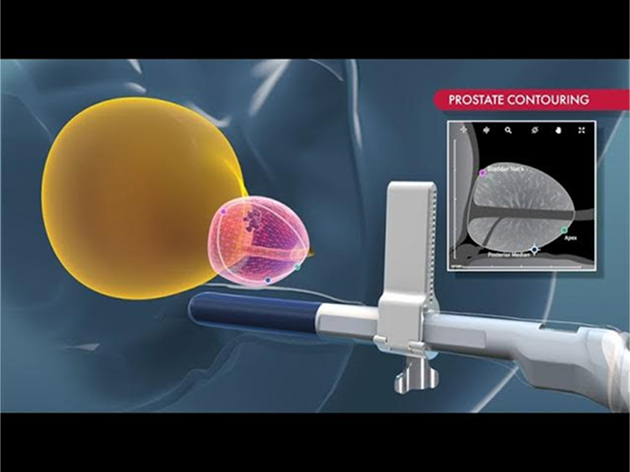
| Planning & Simulation | A planning CT (often fused with MRI) maps your prostate and surrounding anatomy. Skin markers or surface guidance may be used for set-up. |
| Smart Beam Shaping | Computer-guided, multi-angled beams (often with VMAT) conform to the prostate and limit dose to the rectum and bladder. |
| Daily Image Guidance | IGRT (daily cone-beam CT or equivalent) confirms alignment before each treatment. |
| Treatment Schedule | Typically 5 days/week for 5–8 weeks; each visit is about 10–15 minutes. Most men drive themselves and return to normal routines right after. |
Protecting Healthy Tissue
Barrigel®, SpaceOAR®, BioProtect®
To shield the rectum during IMRT prostate cancer arlington tx, we commonly place a temporary spacer between the prostate and rectum:
- Barrigel® (Injectable Hydrogel): Molds precisely to your anatomy; fully absorbed over months. (Barrigel arlington)
- SpaceOAR® (Hydrogel Spacer): Creates space to reduce rectal radiation dose; typically absorbed by ∼4 months. (SpaceOAR arlington)
- BioProtect® (biodegradable balloon): gently expands for defined separation and then resorbs. (bioprotect balloon spacer)
Placement: This is an outpatient procedure (local anesthesia ± light sedation). All spacers dissolve naturally, leaving no permanent implant. I’ll help you and the radiation oncologist choose the option that fits your anatomy and plan.
Who is a Good Candidate for IMRT?
IMRT is an excellent option for:
- Men with clinically localized or locally advanced prostate cancer who prefer radiation or are not surgical candidates.
- Men who require adjuvant or salvage radiation after a prior prostatectomy, based on pathology or rising PSA.
- Men who value a highly targeted, non-invasive treatment with strong long-term cancer control and a predictable schedule.
If we find that another approach better matches your goals (e.g., focal therapy for unilateral disease or surgery for very large glands/obstructive symptoms), we’ll tailor your plan accordingly.
Side Effects
Side Effects: What to Expect with IMRT Prostate Radiation
Because IMRT is highly targeted, most effects are mild and temporary and resolve after treatment
- Urinary: Mild urgency/frequency, occasional weak stream, or temporary nighttime urination.
- Bowel: Softer stools, occasional rectal irritation. Rectal spacers (Barrigel/SpaceOAR) help significantly reduce this risk.
- Sexual Function: Gradual change is possible over time; your baseline function, age, and medications matter.
Your team will review prevention and management (hydration, timed voiding, fiber, meds for urgency/irritation). Serious long-term issues are uncommon with modern planning and spacers.
Your Treatment Journey
- Consult & Decision: We review pathology (biopsy), imaging (MRI), risk group, PSA trends, and your personal goals to tailor the plan.
- Rectal Spacer Placement (if used): Quick outpatient procedure coordinated by Dr. Bevan-Thomas to create vital prostate-rectum separation.
- Planning CT (Simulation): Comfortable mapping session to define the final target volume; tiny skin marks or surface guidance are used for daily setup.
- Treatment Course: Daily IMRT sessions (Mon–Fri) for 5–8 weeks; each visit takes approximately 10 minutes.
- Follow-up & PSA Monitoring: After IMRT, we check PSA periodically. We monitor your PSA trends closely, noting that the major PSA "bounce" is typically associated with brachytherapy.
IMRT vs. Other Options—How We Help You Choose
We’ll put your values—cancer control, recovery time, preservation of urinary/sexual function—at the center of this decision.
| Treatment Option | Key Benefit | Internal Link |
|---|---|---|
| Catheter-Free Robotic Prostatectomy | Minimally invasive surgery with a suprapubic (no Foley) recovery; best for men who prefer surgical removal. | Catheter-Free Robotic Prostatectomy |
| NanoKnife® (IRE) Focal Therapy | Non-thermal, nerve-sparing focal option for unilateral disease in select cases. | NanoKnife® Focal Therapy (IRE) |
| Full-Gland Cryoablation | Effective freezing option, especially in salvage settings after radiation. | Prostate Cryoablation |
| Active Surveillance | Ideal for many low-risk men who want to avoid procedures unless disease progresses. | Active Surveillance |
Frequently Asked Questions
How long does each IMRT session take?
About 10 minutes. Most men are in and out quickly and drive themselves.
What is the difference between IMRT and SBRT (Stereotactic Body Radiation Therapy)?
Both are highly precise forms of radiation. IMRT is typically delivered in a standard schedule (5–8 weeks), while SBRT uses a higher dose over a much shorter period (usually 5 days). The best approach depends on your specific tumor characteristics and anatomy, and we will discuss both with the radiation team.
Will I be radioactive after treatment?
No. IMRT (Intensity Modulated Radiation Therapy) does not make you radioactive—you’re safe to be around family and friends.
What do rectal spacers actually do?
They create a temporary gap between the prostate and rectum to lower rectal radiation dose, which helps reduce bowel irritation and bleeding risk.
What side effects are most common?
Mild urinary urgency/frequency, softer stools/rectal irritation, and fatigue—usually temporary and manageable.
What happens to my PSA after IMRT?
PSA falls gradually over time. While the significant PSA “bounce” is primarily associated with brachytherapy (seed implants), any minor, temporary fluctuations after IMRT will be closely monitored by your care team.
Can IMRT be used after surgery?
Yes—adjuvant or salvage radiation after prostatectomy dallas fort worth may be recommended based on pathology or rising PSA. We’ll review if/when it’s appropriate.
PROSTATE CANCER TREATMENT OPTIONS CONSULT
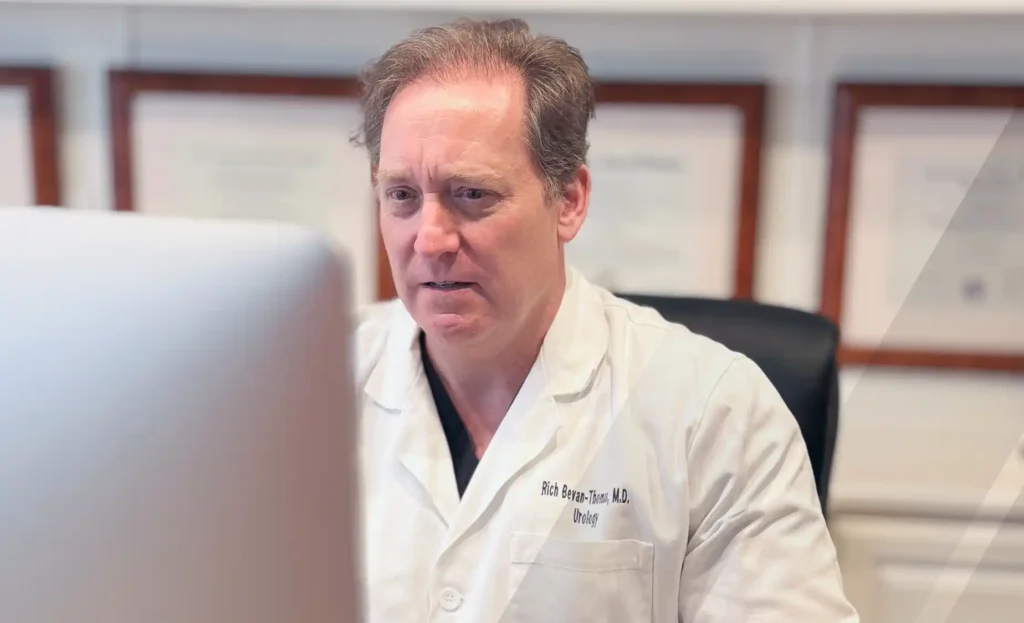
Let’s review your biopsy, MRI, and goals to determine the best path. As a specialist offering surgery, focal therapy, and coordinated radiation (IMRT) with Texas Cancer Specialists, Dr. Bevan-Thomas provides truly balanced advice on which option fits your life
- 866-367-8768
- 801 West I-20 Suite 1 • Arlington TX 76017