

Catheter-Free Robotic Prostatectomy — Arlington & DFW
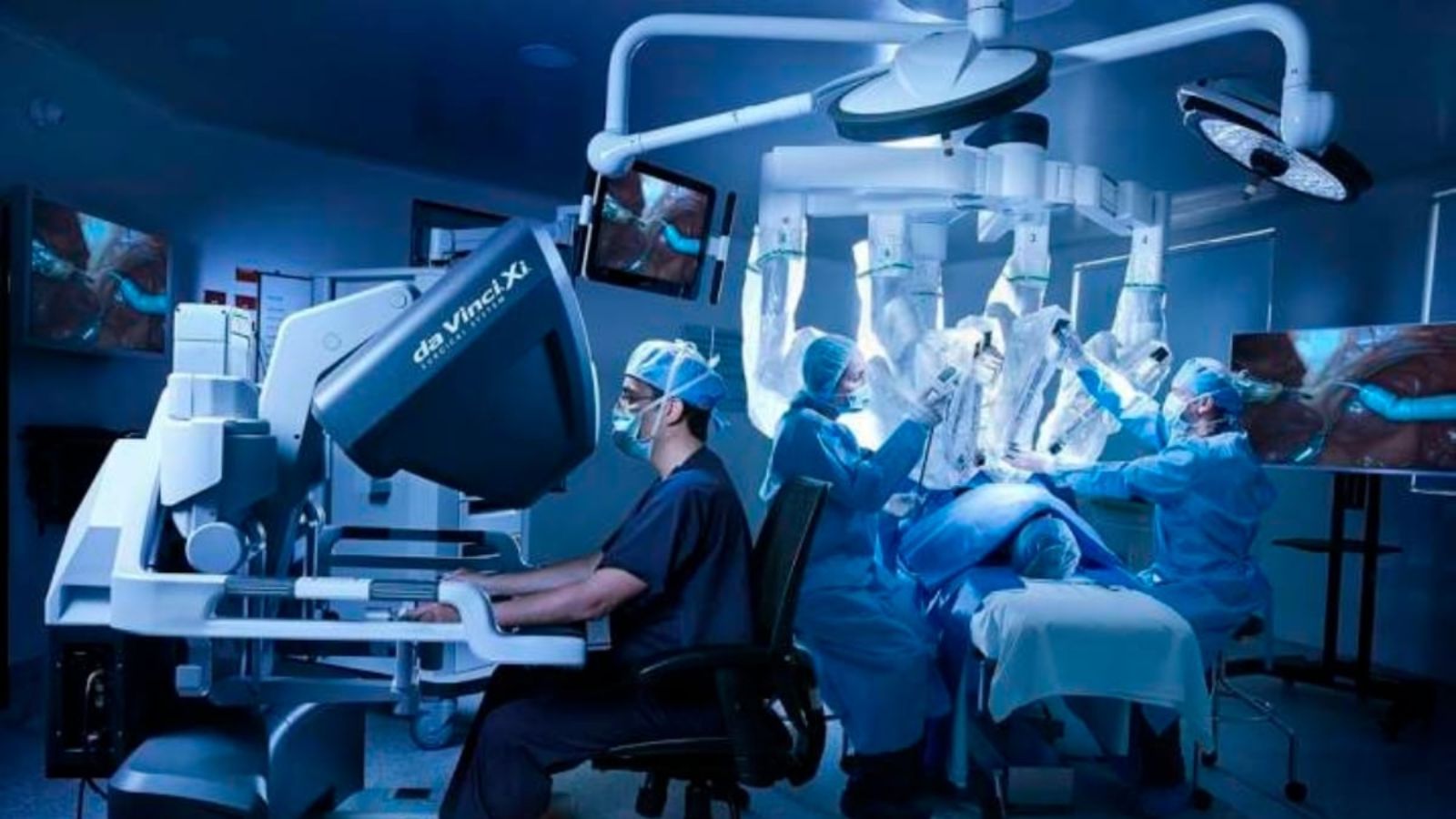
Da Vinci® Precision. Catheter-Free
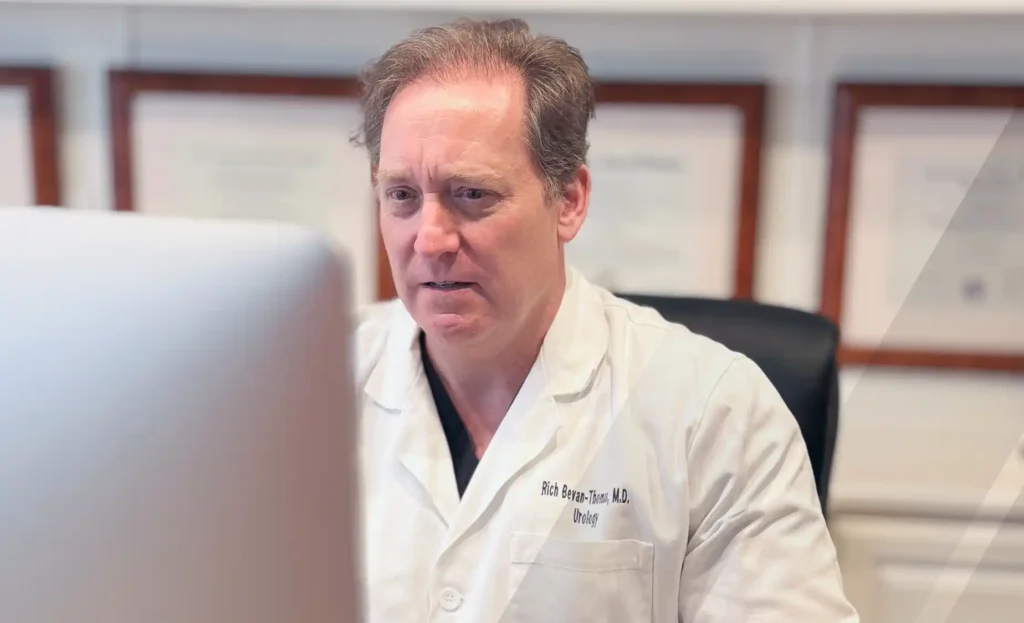
Dr. Bevan-Thomas is a board-certified urologic surgeon in Arlington, Texas, recognized for high-volume expertise with over 3,000 robotic surgeries since 2002. At UPNT, we collaboratively refined the Catheter-Free approach using a small suprapubic tube instead of the standard urethral Foley. I deliver this refined surgical technique personally, ensuring minimized irritation and bladder spasms, and providing less discomfort and a smoother, easier first week of recovery at home—without ever compromising cancer control.
|
What is a Catheter-Free Robotic Prostatectomy?
This is a minimally invasive Da Vinci® robotic prostatectomy where I remove the prostate and carefully reconnect the bladder to the urethra (vesicourethral anastomosis) utilizing 3D magnification and precise, wristed micro-instruments
THE CATHER-FREE DIFFERENCE: Instead of the standard urethral catheter (Foley) being placed through the penis, I use a small, temporary suprapubic tube (SPT) placed through the lower abdomen. This single change is the key to minimizing irritation, spasms, and discomfort during your recovery.
Why patients prefer it
- Less Irritation: No tube through the penis means less irritation, better sleep, and easier walking/sitting.
- Fewer Bladder Spasms: This refers to the cramping, uncomfortable sensation in the lower abdomen that feels like an urgent need to urinate, often lasting 15 to 20 seconds. By avoiding the urethral catheter, we significantly reduce these spasms for many men.
- Uncompromised Cancer Control: The exact same cancer operation, including precise nerve-sparing and lymph-node assessment when needed.
Why the Da Vinci® Robotic System Matters
Outcomes reflect technique + experience, which is why my 3,000+ robotic cases and anatomic focus matter.
- 3D, high-definition, magnified view to see delicate vessels and the neurovascular bundles.
- Wristed instruments with tremor filtration for precise dissection and micro-suturing.
- Meticulous reconstruction for a watertight, low-tension anastomosis, supporting continence.
- The Resulting Functional Difference: My technique, enhanced by the Da Vinci's technology, is designed to deliver industry-leading results for both urinary continence and sexual potency along with cancer control. This level of surgical precision is the foundation for your life after cancer.
How I Protect Function: Nerve & Continence Sparing
Protecting Erections (Nerve-Sparing Approach)
Preserving erectile function starts long before the first incision—planning is everything.
- Planning & Mapping: I review your MRI, Biopsy Map, and Tumor Location to decide which side(s) can be safely spared (full, partial, or no nerve-sparing).
- Intraoperative Technique: Athermal (no heat) dissection next to the prostate capsule, gentle release of the neurovascular bundles with minimal traction, and avoiding cautery on the nerves.
Speeding Continence (Endopelvic Fascia–Sparing Technique)
Early urinary control is a combination of anatomy preserved + reconstruction done right.
- What I Preserve: Endopelvic fascia and puboprostatic ligaments (the native “hammock” supporting the urethra). Maximal urethral length and the external sphincter.
- What I Reconstruct: I perform posterior reconstruction (e.g., the Rocco stitch) and place anterior suspension sutures. These are key, multi-point techniques used to create a watertight, low-tension reconnection (anastomosis), which is the final step in ensuring excellent continence outcomes.
My Continence Outcomes (Practice Data):
- Rapid Recovery: A significant number of my patients are dry upon removal of the SPT (typically around day 5–7), indicating early control.
- Strong Early Improvement: Most patients achieve a strong return to continence within 3-6 months.
- Excellent Long-Term Outcome: The vast majority of my patients are fully dry by one year, demonstrating the long-term success of the technique.
The Catheter-Free Pathway (Step-by-Step)
Who’s a good candidate?
Most men who have not had prior pelvic radiation. I will confirm your suitability during your consultation.
Pre-op Prep
- Pelvic-Floor Pre-Habilitation: Learn Kegels to optimize urinary control before surgery. Dr. Bevan-Thomas will give you detailed instructions on how to perform these exercises correctly and effectively to optimize results.
- Medication review (timing blood thinners safely).
- Nutrition (protein-forward meals) & walking.
The Operation → Going Home
- Operation: Precise dissection, safe nerve-sparing, lymph-node assessment (as indicated), and meticulous reconstruction for continence.
- Catheter-Free Transition: We place a small, comfortable suprapubic tube (SPT). The urinary urethral catheter used during surgery is removed in the recovery room before you are discharged, ensuring your urethra is catheter-free.
- Discharge: Same-day discharge for most patients with clear instructions for walking, hydration, and Suprapubic Tube care.
Recovery Timeline (Realistic Expectations)
| Recovery Milestone | Current Timeframe |
|---|---|
| Urinary Control | Improvement over 3–12 months; pads early are normal. |
| Erections/Sexual Health | Improvement commonly over 6–18 months with nerve-sparing. |
| Driving/Work (Desk) | 1–2 weeks |
| Follow-up PSA | First at 6–8 weeks, then regularly. |
Penile Rehabilitation: We prescribe PDE-5 medications (e.g., tadalafil) and recommend a vacuum device to keep tissues healthy while nerves recover. We focus on maximizing recovery and function.
Frequently Asked Questions
How do you preserve erections during surgery?
Preserving function requires meticulous planning and technique. I begin by mapping nerve location using your MRI/biopsy fusion map.
Intraoperatively, I utilize athermal (no heat) dissection right against the prostate capsule, ensuring minimal traction and zero cautery on the neurovascular bundles.
What is endopelvic fascia–sparing and why does it matter?
The endopelvic fascia is the supportive fibrous tissue that covers the complex muscular structures, including the pelvic floor muscles, that take over urinary control after the prostate is removed. Preserving this fascia maintains the native “hammock” supporting the urethra and the bladder neck. This technical meticulousness is crucial because it helps many men regain early and complete urinary continence.
What continence results should I expect?
The data from my surgical experience demonstrates a rapid and successful recovery of urinary control:
Early Control: A significant portion of my patients typically regain full dryness within the first few weeks after the suprapubic tube (SPT) is removed.
Six-Month Milestone: Most of my patients achieve a return to excellent continence within six months.
Long-Term Success: The vast majority of my patients are fully dry at one year.
Please Note: These results reflect the high standards of care from my dedicated surgical team. Individual patient outcomes may vary and are never guaranteed.
How long is the hospital stay?
Most of my patients go home the same day thanks to the specialized catheter-free approach and nerve blocks per anesthesia. Occasionally, a patient may stay overnight for monitoring, but the majority are discharged within just a few hours after surgery.
How long will I have the suprapubic tube?
The suprapubic tube (SPT) is typically kept in place for 5–7 days. It is removed quickly and easily in the office during your first post-operative visit.
Schedule your catheter-free robotic consultation (Arlington & DFW)
Request your Catheter-Free Robotic Prostatectomy consultation — Arlington & Dallas–Fort Worth.
- 866-367-8768
- 801 West I-20 Suite 1 • Arlington TX 76017
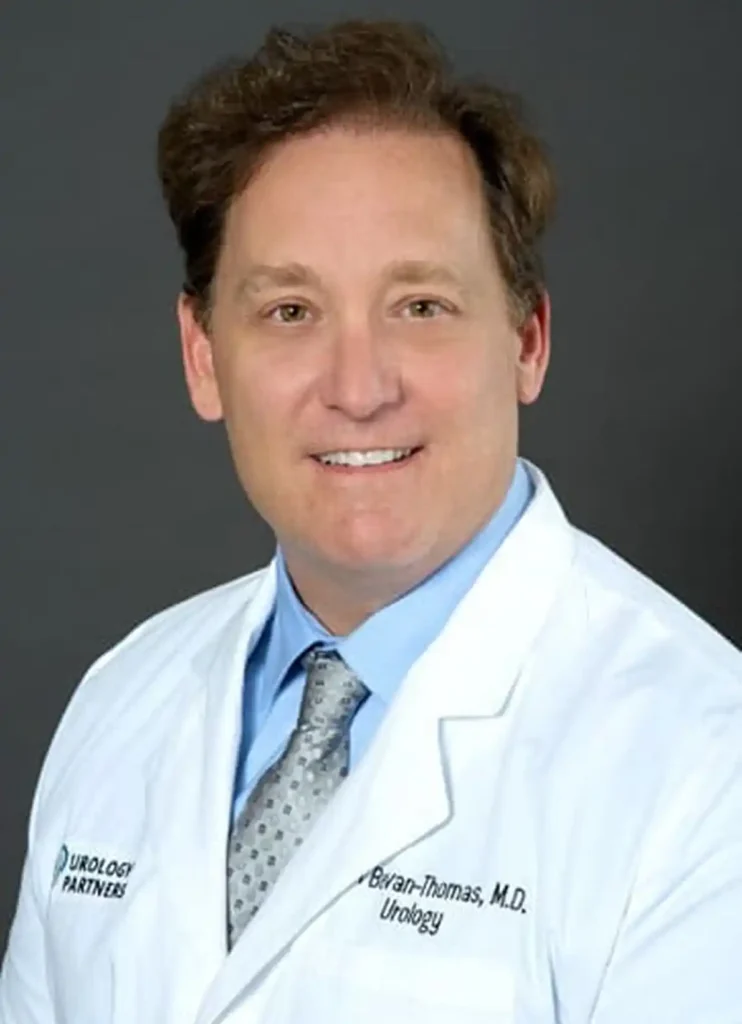
About Dr. Rich Bevan-Thomas
- Robotic Surgery Volume: Over 3,000 robotic surgeries since 2002; refined catheter-free suprapubic recovery protocol.
- Technique: Meticulous nerve-sparing and endopelvic fascia-sparing techniques to support erections and early continence.
- Full Spectrum: Full-Spectrum Urologic Solutions: Offering advanced therapies, including Robotic Surgery (RALP), NanoKnife® (IRE) focal therapy, full-gland cryoablation, coordinated IMRT, and expert management for early-stage prostate cancer.