Most men do not delay scheduling a vasectomy because they are unsure their family is complete.
They put it off because they imagine the wrong thing.
Pain. Stitches. Swelling. Embarrassment. A long recovery. A week on the couch. Some vague fear that things will not feel the same afterward.
The reality is usually much simpler.
At my Arlington office, a no-scalpel vasectomy is performed through a tiny opening in the skin, using local anesthesia, without a traditional incision and without stitches. The procedure itself usually takes about 10 minutes, and most men are surprised by how straightforward it feels.
For many patients, the hardest part is not the vasectomy.
It is making the appointment.
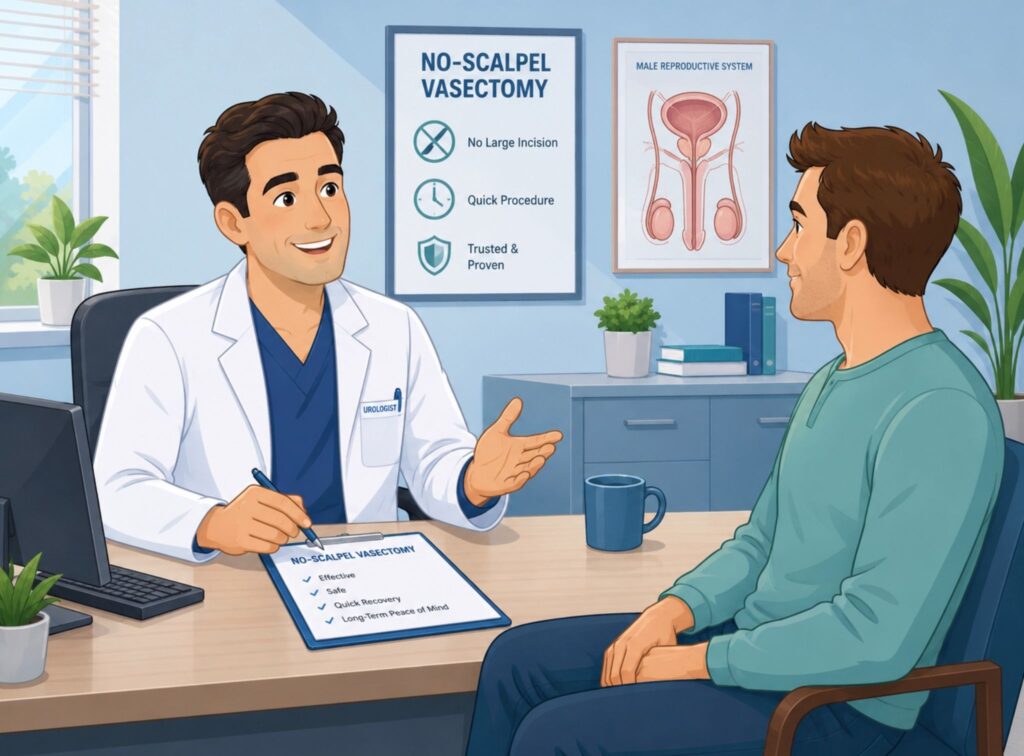
What Is a No-Scalpel Vasectomy?
A vasectomy blocks the vas deferens, which are the small tubes that carry sperm from the testicles. Once those tubes are blocked and your follow-up semen test confirms that no sperm are present, sperm can no longer enter the semen.
You still ejaculate normally.
You still produce testosterone normally.
Your erections, sex drive, orgasm, and masculinity do not change.
Because sperm make up only a small portion of semen, usually around 10%, most men should not see or feel any difference when they ejaculate. The majority of semen fluid comes from the prostate and seminal vesicles, which are not affected by a vasectomy.
The goal is simple: keep sperm out of the semen.
With a traditional vasectomy, small incisions are made in the scrotal skin. With a no-scalpel vasectomy, I use a specialized instrument to create one tiny opening instead of making a traditional cut. Through that small opening, the vas deferens are accessed, divided, sealed, and secured.
Because there is no traditional incision, there is usually less bleeding, less tissue trauma, no need for stitches, and a faster recovery for most men.
Why Technique Matters
A vasectomy is quick, but it should never be careless.
Most people think the procedure is just about “cutting the tubes.” That is only part of it. The real goal is to block the vas in a way that makes failure extremely unlikely.
One rare reason a vasectomy can fail is called recanalization, where the two ends of the vas deferens reconnect over time.
That is why my technique is intentionally meticulous. I do not just cut the vas and move on. I cut it, cauterize it, seal it, and place a tiny clip on each end to help keep the two sides separated.
The clips are very small, roughly the size of an ant. They sit deep on the vas deferens, are not visible, and patients should not be able to feel them after healing. They also do not set off airport metal detectors.
That extra detail matters.
A 10-minute procedure still deserves careful technique.
Can the Consultation and Vasectomy Be Done the Same Day?
In many cases, yes.
If you are certain your family is complete, we can often perform the consultation and no-scalpel vasectomy during the same visit. We review your medical history, confirm that you understand the permanent nature of the procedure, answer your questions, and then perform the vasectomy if everything is appropriate.
This is one reason men across Arlington and the DFW area choose this approach and make an appointment with Dr. Bevan-Thomas. It is efficient, practical, and designed for busy patients who do not want to make multiple office visits for something that can often be handled in one appointment.
What Happens During the Procedure?
First, the area is cleaned and numbed with local anesthesia. You may feel a quick pinch or pressure with the numbing medicine, but after that, you should not feel sharp pain.
Once the area is numb, I make a tiny opening in the skin and gently access the vas deferens. Each side is divided, cauterized, sealed, and secured with tiny clips, roughly the size of an ant, to help keep the two ends separated.
The procedure itself usually takes about 10 minutes.
No stitches are needed. A small bandage is placed over the area, and you go home the same day.
I commonly use Celebrex, a strong anti-inflammatory medication, to help reduce swelling and discomfort after the procedure. Antibiotics are also used to help reduce the already low risk of post-procedure infection.
Most men walk out saying some version of:
“That was it?”
The Rule of 5’s: How to Recover the Right Way
The procedure is short, but recovery still matters.
That is why I use what I call the Rule of 5’s:
Take it easy for 5 days.
That does not mean you are helpless for 5 days. It means you should respect the healing process and not create unnecessary swelling, bleeding, or discomfort by doing too much too soon.
For the first 24 to 48 hours, keep activity low. Stay off your feet as much as possible, use ice packs, wear supportive underwear, and avoid unnecessary walking, lifting, or exertion.
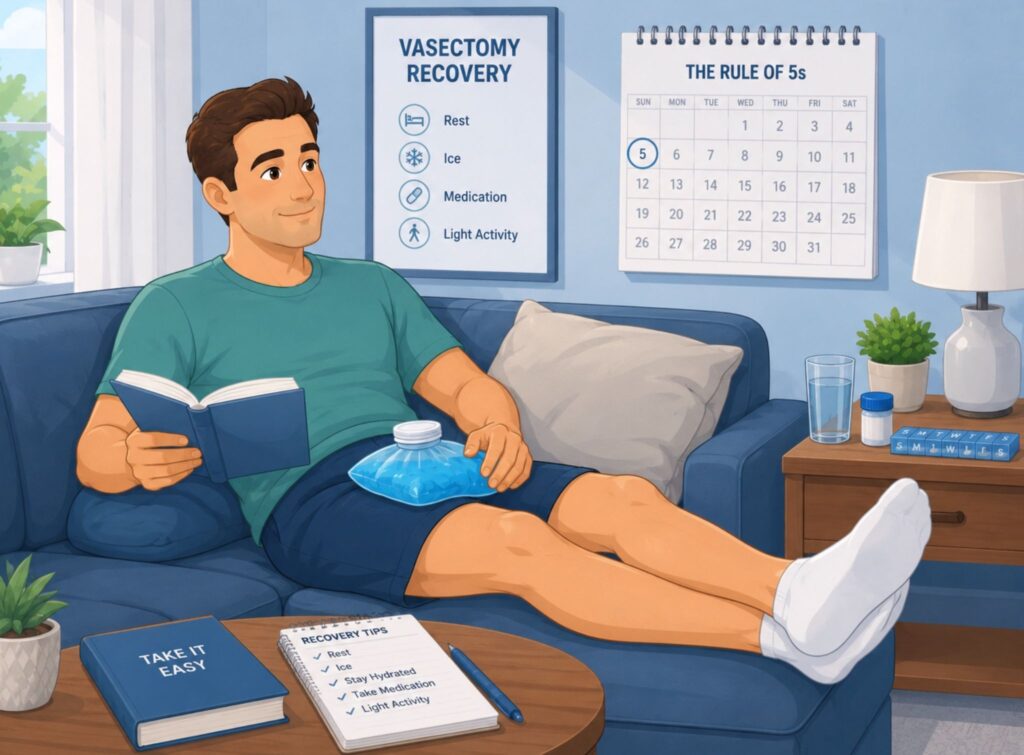
You will also receive clear medication instructions. For many patients, this includes Celebrex, which helps reduce inflammation and soreness during the early recovery period. Antibiotics are also used to further reduce the small risk of infection.
These medications are helpful, but they are not a substitute for proper recovery. The most important part is still following the Rule of 5’s and not overdoing activity too early.
Over the next few days, you can gradually return to light activity. Most men can get back to desk work quickly, depending on how they feel.
But for the first 5 days, avoid:
- Heavy lifting
- Running
- Cycling
- Strenuous workouts
- Yard work
- Sexual activity
By around day 5, most men can resume normal activity if they are feeling well.
The men who recover best are usually the ones who do not try to prove anything the first few days.
When Is a Vasectomy Effective?
This is the part you cannot ignore:
A vasectomy does not work immediately.
Sperm can remain in the reproductive tract for weeks to months after the procedure. That means you must continue using another form of birth control until your follow-up semen analysis confirms that no sperm are present.
In my practice, every patient uses the Fellows at-home semen analysis kit at about 3 months after the procedure.
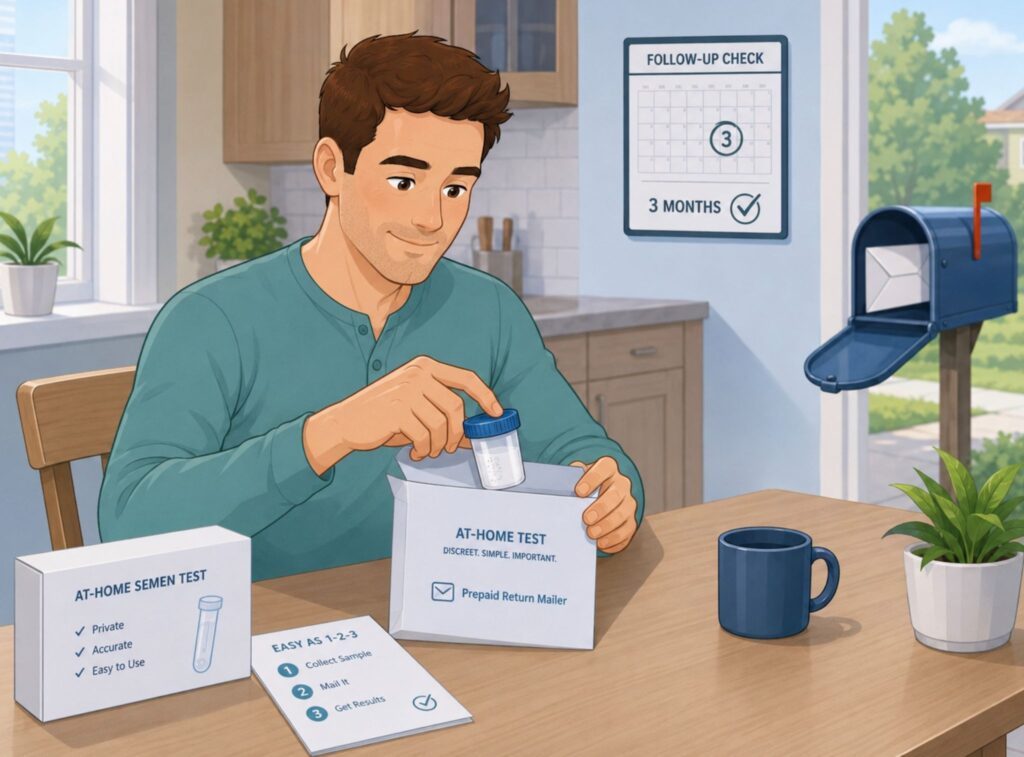
This makes the follow-up process much easier. You collect the sample privately at home and mail it in for testing. No awkward trip to a lab. No rushing across town. No uncomfortable collection room.
Once the result confirms that no sperm are present, you can stop using backup birth control.
Until you are told that the sample is clear, you are not considered sterile.
This follow-up test is not optional. It is the step that confirms the procedure worked.
Does a Vasectomy Hurt?
Most men are surprised by how little discomfort they feel during the procedure.
The numbing medicine works well. During the vasectomy, you may feel pressure, movement, or tugging, but you should not feel sharp pain.
Afterward, a dull ache or soreness is common for a few days. This is usually managed with rest, ice, supportive underwear, and anti-inflammatory medication when appropriate.
The anxiety before the procedure is often worse than the procedure itself.
Will I Feel the Clips After Vasectomy?
No.
The clips used during the procedure are tiny, about the size of an ant, and are placed on the vas deferens beneath the skin. After healing, you should not be able to see or feel them.
They also do not set off airport metal detectors.
Will a Vasectomy Affect Testosterone, Erections, or Sex Drive?
No.
A vasectomy does not lower testosterone. It does not affect erections. It does not reduce sex drive. It does not change orgasm. It does not make you less masculine.
Your testicles still produce testosterone normally. The only thing that changes is that sperm are blocked from entering the semen.
Because sperm make up only about 10% of semen volume, most men should not see or feel any difference when they ejaculate. The majority of semen fluid comes from the prostate and seminal vesicles, which are not affected by the procedure.
In other words, the experience should feel the same. The semen simply no longer contains sperm once the follow-up test confirms clearance.
Is a Vasectomy Reversible?
Sometimes, but a vasectomy should be considered permanent.
Vasectomy reversal is possible in some cases, but it is more complicated, more expensive, and not guaranteed. If you think you may want more children in the future, you should wait.
A vasectomy is a great option for men who are confident their family is complete. It is not a good option for men who are still unsure.
Does Vasectomy Increase the Risk of Prostate Cancer?
No.
Current medical evidence does not show that vasectomy causes prostate cancer. A vasectomy blocks sperm transport. It does not change testosterone production, prostate biology, or sexual function.
This concern comes up often, but it should not be a reason to avoid the procedure.
Who Is a Good Candidate for No-Scalpel Vasectomy?
A no-scalpel vasectomy may be a good option if:
- Your family is complete
- You want permanent birth control
- You want to avoid ongoing hormonal contraception
- You want to avoid a more invasive procedure for your partner
- You want a quick office procedure without general anesthesia
- You understand that a vasectomy should be considered permanent
The best candidate is a man who has made a clear decision and wants the process handled efficiently, carefully, and correctly.
Why Men Usually Wish They Had Done It Sooner
Most men build up the vasectomy in their minds.
They imagine something far worse than what usually happens.
In reality, a no-scalpel vasectomy is typically a short office procedure, done with local anesthesia, through a tiny opening, with no stitches and a simple recovery plan.
You take it easy for 5 days.
You use the Fellows at-home semen analysis kit at 3 months.
Then, once you are cleared, you can stop worrying about permanent birth control.
For many couples, that peace of mind is the real benefit.
Schedule a No-Scalpel Vasectomy in Arlington, TX
If your family is complete and you want a permanent birth control option without a hospital visit, general anesthesia, stitches, or a long recovery, a no-scalpel vasectomy may be the right choice.
Dr. Richard Bevan-Thomas performs a no-scalpel vasectomy in Arlington for men across Dallas-Fort Worth, using a careful technique designed for comfort, efficiency, and long-term reliability.
Schedule a consultation to discuss whether a same-day consult and 10-minute no-scalpel vasectomy is right for you.